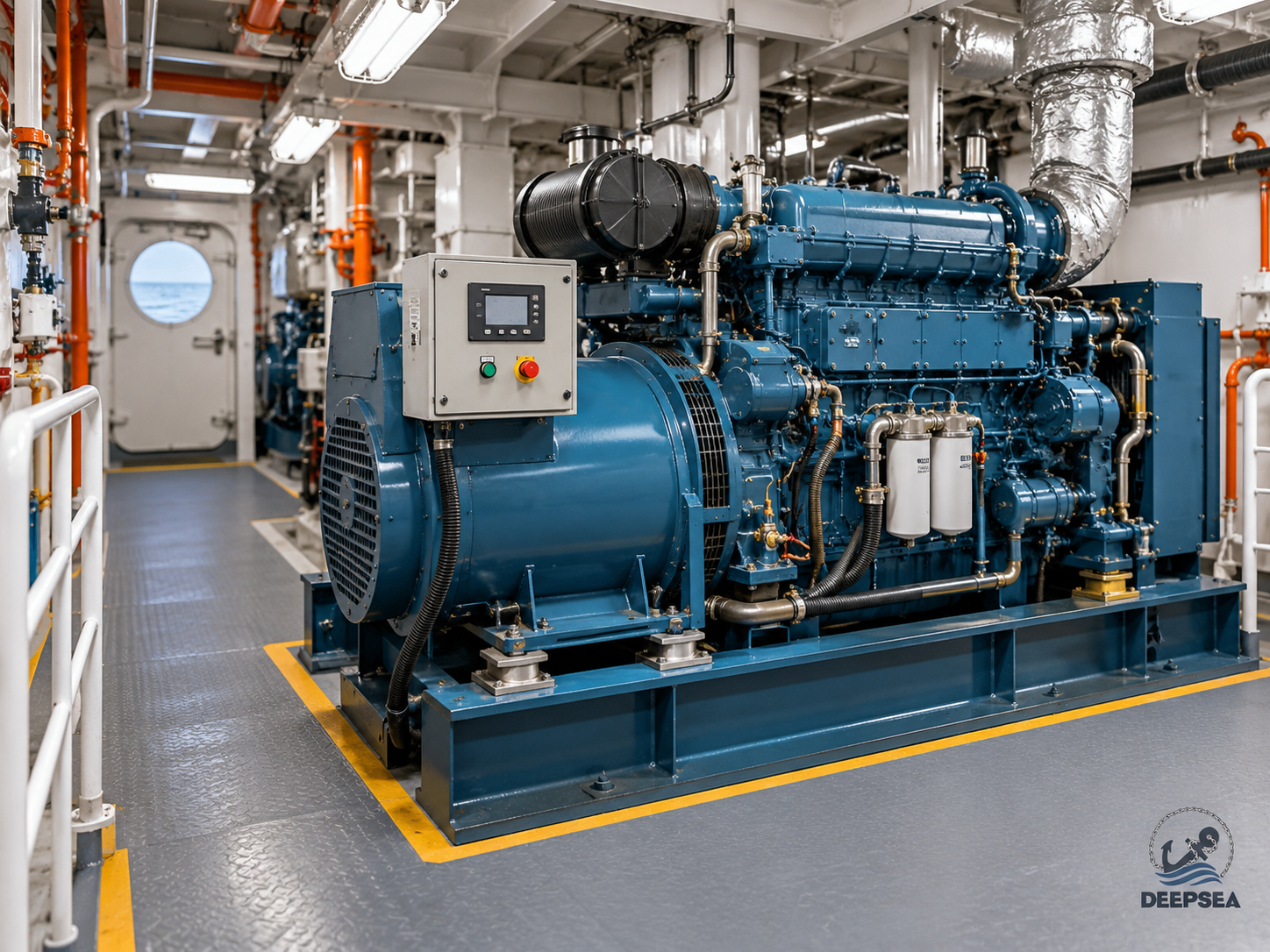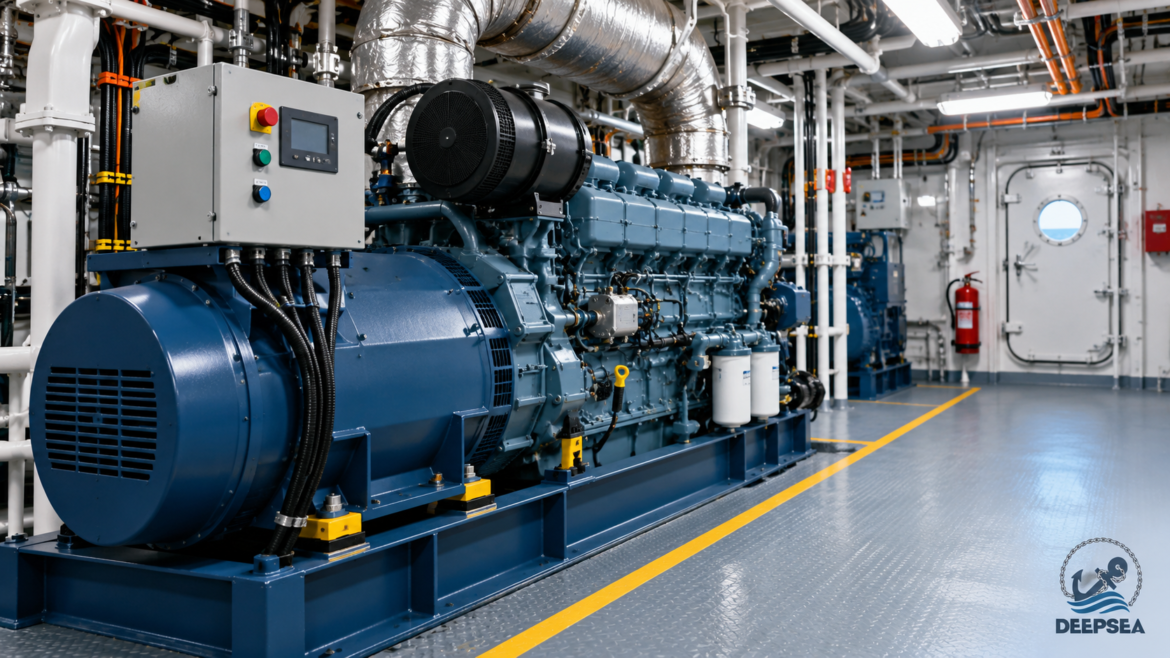
Marine Generator Maintenance Checklist for Commercial Vessels
Meta Description: Keep your vessel’s auxiliary power systems running reliably. Read our marine generator maintenance checklist covering daily parameter checks, electrical inspections, lube oil protocols, and overload identification.
On a commercial vessel, continuous electrical power is non-negotiable. Auxiliary generators supply energy for navigation systems, engine room pumps, reefer containers, and domestic facilities. Generator failure while at sea or during cargo operations leads to operational delays, severe financial losses, and safety hazards.
To help marine engineers and vessel superintendents maintain auxiliary power reliability, Deep Sea Ship LLC has compiled this essential maintenance checklist for commercial vessel generators.
Phase 1: Daily Parameter Checks (Temperature & Pressure Readings)
Daily operational logging is your first line of defense against generator breakdown. Inconsistent readings often indicate underlying mechanical issues before alarms trigger.
- Lube Oil Pressure: Verify operating pressure against manufacturer specifications under standard operating load.
- Cooling Water Temperatures: Monitor jack water inlet and outlet temperatures. Check for unusual temperature differentials across heat exchangers.
- Exhaust Gas Temperatures: Record individual cylinder exhaust temperatures. Significant deviations indicate fuel injection problems, valve leakage, or unbalanced load distribution.
- Operating Frequency and Voltage: Confirm output stability (typically 60Hz / 440V or 50Hz / 380V depending on vessel specification).
- Visual Fluid Leak Inspection: Check around the engine block, pumps, and pipe connections for signs of oil, fuel, or coolant leaks.
Phase 2: Weekly Electrical & Mechanical Inspections
Weekly preventive maintenance ensures electrical delivery components and mechanical linkages remain clean and secure.
- Generator Brushes and Collector Rings: Inspect carbon brushes for wear, freedom of movement in holders, and proper spring tension. Clean accumulated carbon dust.
- Electrical Terminals and Connections: Inspect main terminal box wiring and control panel connections for looseness caused by engine vibration.
- Starter Battery System: Test electrolyte levels, check terminal corrosion, and confirm automatic charger performance.
- Air Intake and Filters: Inspect turbocharger intake filters and crankcase breathers for blockage or excessive oil carryover.
- Safety Shutdown Devices: Test overspeed trips, low oil pressure shutoffs, and high water temperature alarms where operational schedules permit.
Phase 3: Scheduled Lube Oil Sampling & Filtration Protocols
Engine oil quality directly determines the lifespan of crankshaft bearings, liners, and pistons.
- Lube Oil Sampling: Take routine oil samples for laboratory analysis to check for viscosity changes, fuel dilution, soot loading, and wear metals (iron, copper, lead).
- Filter Element Replacement: Replace lube oil duplex filters and fuel fine filters at scheduled running-hour intervals or when differential pressure indicators signal high clogging.
- Centrifugal Oil Purifier Maintenance: Clean separator bowls and inspect disc stacks to ensure optimum removal of sludge and water contamination.
- Sump Level Top-ups: Maintain lube oil sumps within approved upper-level marks using recommended marine lubricant grades.
Phase 4: Identifying Early Signs of Load Instability & Thermal Overload
Early detection prevents minor electrical faults from escalating into catastrophic alternator stator or rotor burns.
- Voltage Droop and Frequency Fluctuations: Sudden hunting during load changes points to governor misalignment, fuel supply restriction, or automatic voltage regulator (AVR) degradation.
- Thermal Overload Indicators: Check local generator enclosure temperatures and stator winding temperature sensors. Elevated temperatures despite normal room ventilation signal internal resistance or overload.
- Abnormal Vibration or Noise: Listen for unusual bearing noise in the alternator end-shield and inspect anti-vibration mountings for deterioration.
- Excitation System Health: Monitor excitation current stability during step-load changes.
Professional Marine Generator Overhaul & Engineering Services in Dubai
While routine checklist items can be carried out by onboard engineering crews, major overhauls, alternator rewinding, governor calibration, and complete engine rebuilds require specialized workshop capabilities.
Deep Sea Ship LLC provides comprehensive marine engineering, generator maintenance, and engine repair services out of Dubai, supporting commercial vessels across the UAE region. Contact our Dubai engineering team today for specialized generator maintenance and complete overhaul services.