5 Indicators That Your Marine Engine Requires Professional Overhaul
Target Audience: Vessel Owners, Chief Engineers, and Ship Managers
Primary Keyword: Marine engine repair services in Dubai
Channel: Blog | Format: Structured Article
For commercial vessel operators and technical management teams navigating busy maritime routes in the UAE, main engine reliability is essential to operational continuity. Unexpected engine failure leads to severe vessel downtime, charter disruptions, and elevated dry docking costs.
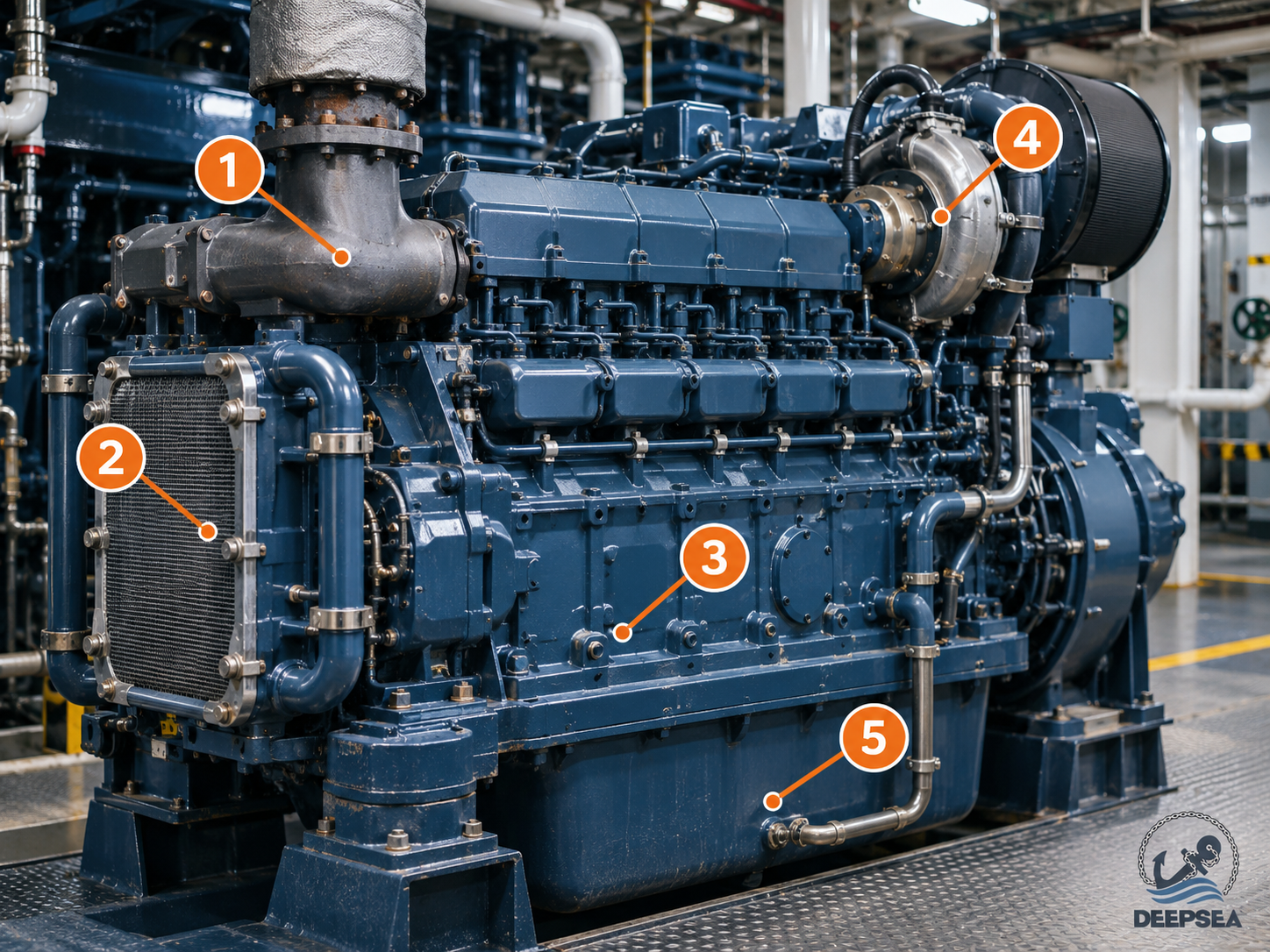
Recognizing early mechanical and thermodynamic warning signs allows engineering crews to intervene before component fatigue leads to catastrophic failures. Here are five critical indicators that your main marine engine requires a professional overhaul from experienced marine engineering specialists in Dubai.
1. Uncharacteristic Exhaust Smoke Color and Density
Exhaust gas appearance is a direct window into combustion chamber health. While minor fluctuations under load changes can occur, persistent changes in smoke color signal significant internal issues:
- Black Smoke: Indicates incomplete combustion, often caused by fouled fuel injectors, insufficient turbocharger air supply, or overloaded cylinders.
- White Smoke: Points to unburned fuel or coolant leaking into the cylinder, suggesting head gasket failure or cracked cylinder liners.
- Blue Smoke: Clear evidence of lubricating oil entering the combustion chamber due to worn piston rings, valve guides, or cylinder liner scuffing.
2. Persistent Coolant and Lube Oil Temperature Spikes
Engine cooling and lubrication systems operate within strict temperature windows. Continuous thermal spikes despite normal cooling water inlet temperatures suggest severe internal friction or thermal transfer blockage. Accumulation of scale, heat exchanger tube degradation, or failing lube oil coolers cause elevated operating temperatures that degrade oil viscosity and accelerate bearing wear.
3. Increased Vibration and Unusual Mechanical Knocking
Excessive structural vibration or distinct metallic knocking sounds are urgent operational red flags. Rhythmic knocking typically stems from excessive clearance in main bearings, gudgeon pins, or crankpin bearings. Unchecked vibration destabilizes the crankshaft, accelerates alignment issues between the engine and intermediate shafting, and risks structural failure of foundation bolts.
4. Unexplained Loss of Power Output Under Standard Load
When an engine fails to achieve rated output or RPM under standard propeller pitch and load conditions, compression efficiency has likely degraded. Common root causes include severe piston ring blow-by, burnt exhaust valves, turbocharger turbine fouling, or fuel injection pump wear. Continuing to operate under-power forces remaining components to overcompensate, increasing thermal stress.
5. Contaminated Lube Oil and Abnormal Pressure Drops
Regular lube oil analysis is vital for monitoring wear metals and fluid contamination. The persistent presence of metallic particulates (copper, iron, or aluminum), fuel dilution, or water ingress signals rapid component degradation. Furthermore, an unexplained drop in main lube oil pressure under normal operating temperatures indicates worn oil pumps or excessive bearing clearances, requiring immediate professional inspection.
Protect Your Vessel with Professional Engineering Support
Delaying main engine maintenance increases repair complexity and operational loss. Deep Sea Ship LLC delivers comprehensive marine engineering and engine repair solutions in Dubai, helping vessel operators restore main engine performance and extend machinery lifecycle.
Ready to assess your main engine condition?
Schedule an on-site engine inspection with our Dubai marine engineering team.